Sauna SightingsSauna EtiquetteAbout

Sauna Etiquette

All the questions you want to ask. All the answers you really SHOULD know.

This guide is in two parts. Jump to whichever you're here for.

The Questions

Do I have to get naked?

No. This is not Finland.

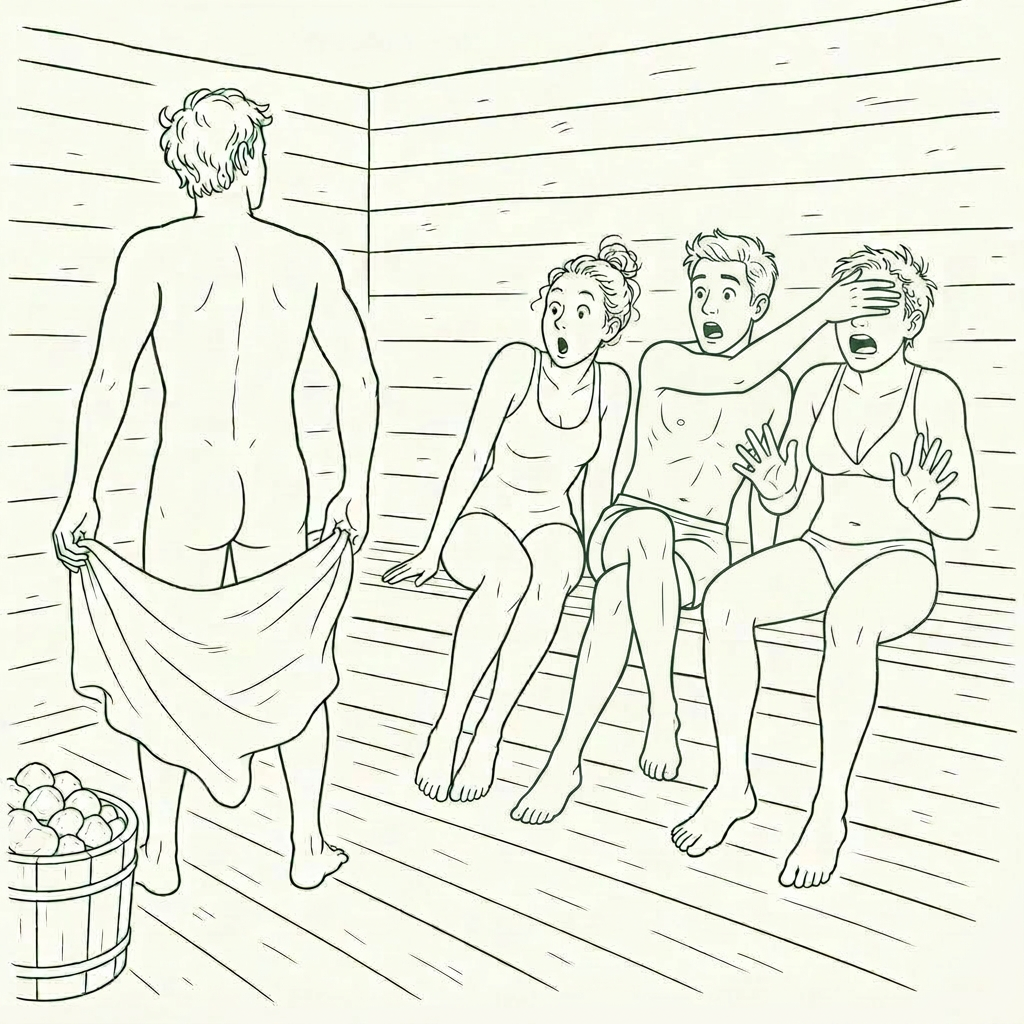
Irish saunas operate almost universally in swimwear. You will not be expected to disrobe. Nobody will raise an eyebrow at your togs. The changing room situation is what it is, but the sauna itself is a swimwear environment.

Sauna-goers reacting with shock as someone removes their towel
The horizon is always very interesting in Ireland.

What if someone else gets naked?

This is vanishingly rare in Ireland and would generally be considered a social miscalculation rather than a cultural statement.

If it happens, the correct response is to look at the horizon with great interest. The horizon is always very interesting in Ireland. This is why we build saunas facing it.

What should I bring?

The short answer: a towel, water, and yourself.

The slightly longer answer: two towels. One to sit on in the sauna (mandatory, see below), one to dry off with afterwards. They serve different functions and conflating them is a mistake you make once.

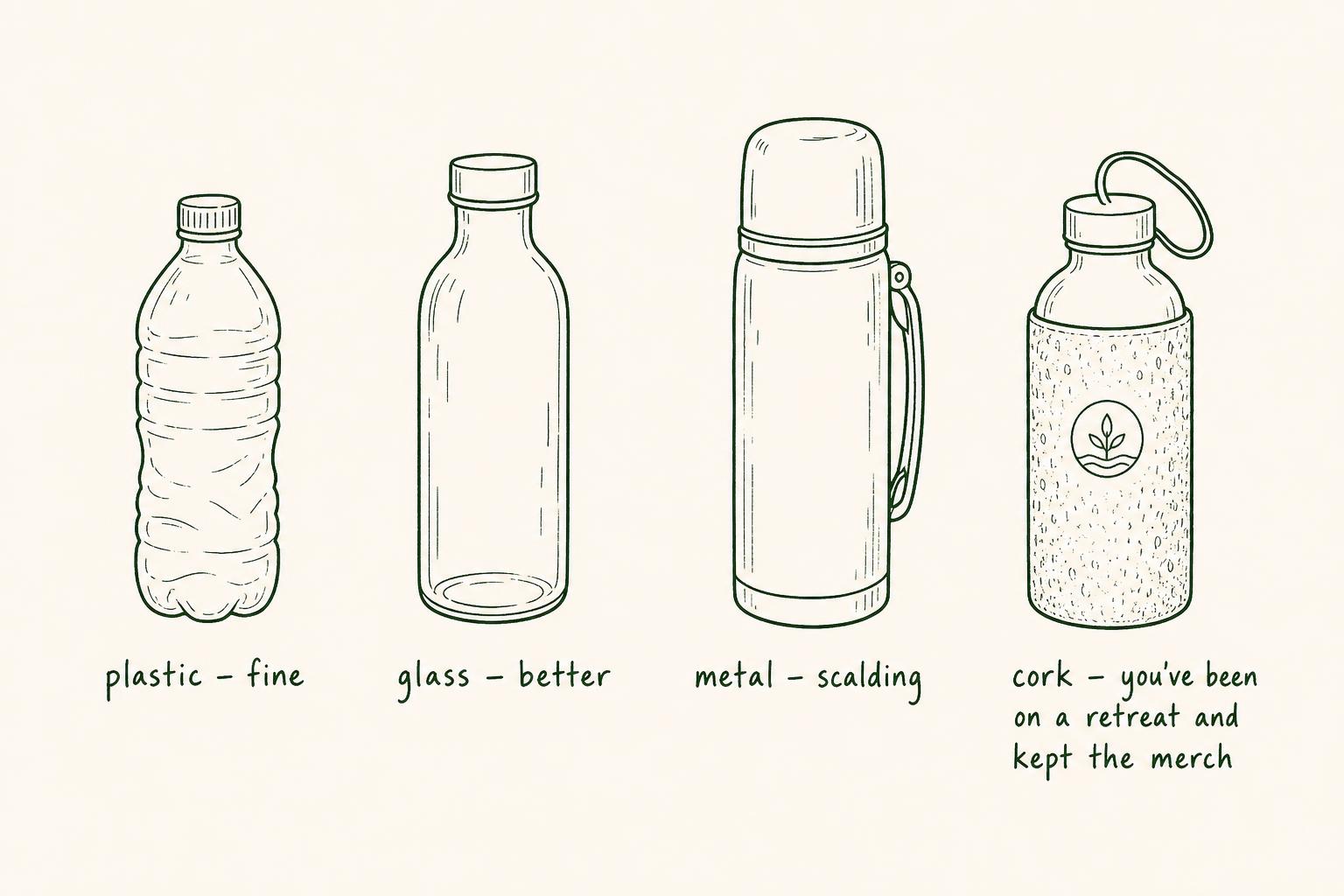
Three water bottles in a row
Plastic: fine. Metal: scalding. Cork: you've been on a retreat.

Do I wear flip flops in the sauna?

No. They stay outside the door.

Flip flops are for the changing room, the shower area, and the walk between facilities. Inside the sauna they are unnecessary and can release unpleasant fumes at high temperatures depending on what they are made of.

Person holding the sauna door open while removing flip flops
Don't be this person.

Should I eat before?

Light meal or nothing. A full stomach and extreme heat are not friends.

Do I need to shower first?

Yes. Always. Every time. Before the sauna, before the plunge, before the plunge again on your second round. The shower exists for a reason. Use it.

How hot is too hot?

When you stop enjoying it.

Most Irish saunas run between 70 and 90 degrees Celsius. Finnish traditionalists consider anything under 80 a warm room with ambitions. The right temperature is the one that feels challenging but not unbearable. You should be sweating, not suffering.

Is hotter better?

No. Hotter is just hotter.

The sauna works at a wide range of temperatures. What matters is sustained heat exposure and the contrast with cooling, not the absolute number on the thermometer. A 75 degree sauna you can stay in for 15 minutes does more than a 95 degree sauna you have to leave after four.

How long should I stay in the sauna?

Somewhere between not long enough to feel it and too long to enjoy anything afterwards.

A typical first round is 10 to 15 minutes. Experienced users might go 20. After that, the returns diminish and the risks increase.

There is no prize for staying in the longest. Anyone who tells you otherwise is compensating for something.

Am I allowed to lay down on the seats?

In a private booking, absolutely.

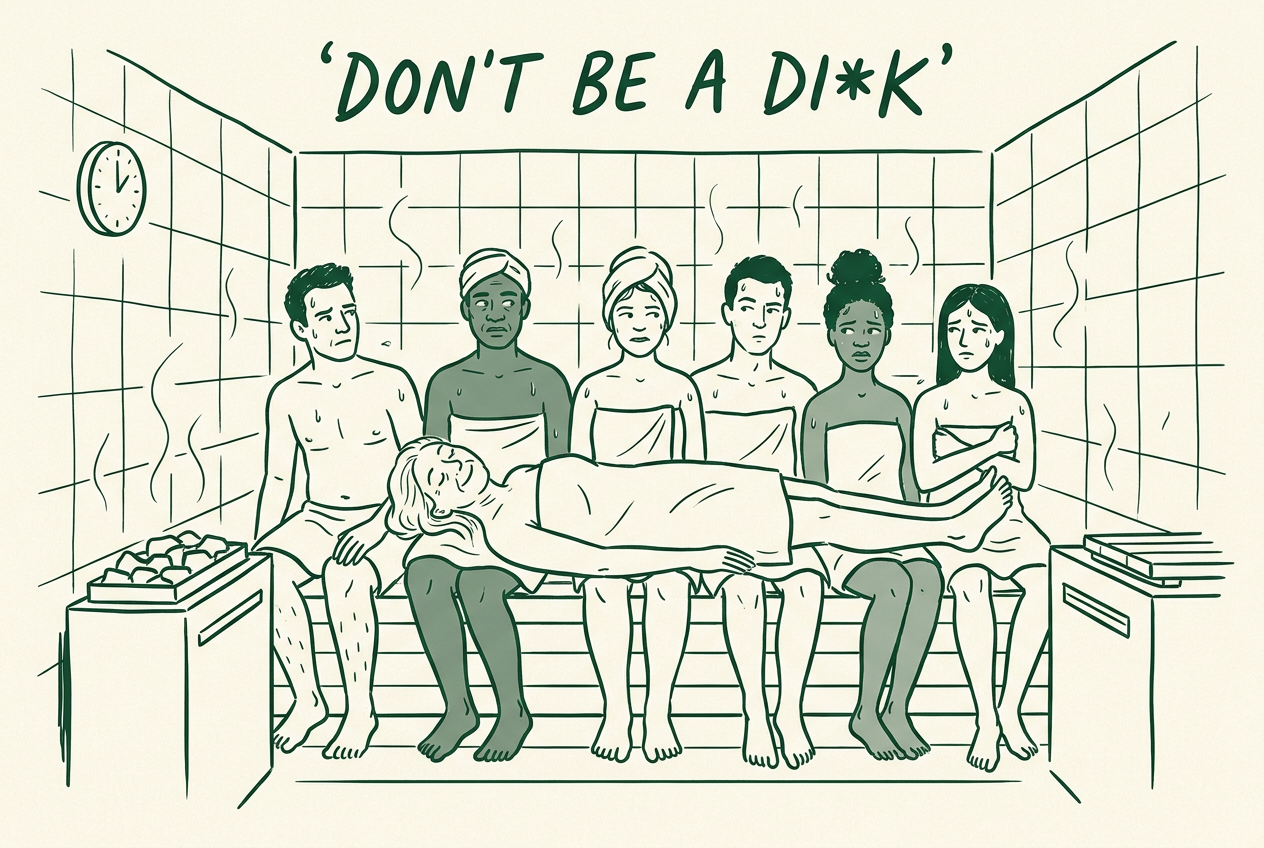
In a shared session, be aware of the space. Lying down takes up the room of two or three seated people. If the sauna is quiet, go for it. The horizontal position is genuinely more relaxing and distributes the heat more evenly across your body. If it is busy, sit up and be a normal person.

An overcrowded sauna with one woman lying serenely across the bench while everyone else is squeezed in
She was very relaxed. Nobody else was.
They do not have a word for winning a sauna.

How often should I add water to the stones?

In a private booking: whenever you like.

In a shared session: ask first, or wait for the host to do it. The steam produced when water hits the stones dramatically increases the perceived temperature and humidity. What is pleasant for you might be overwhelming for the person next to you.

Can I talk?

Yes, though you do not have to.

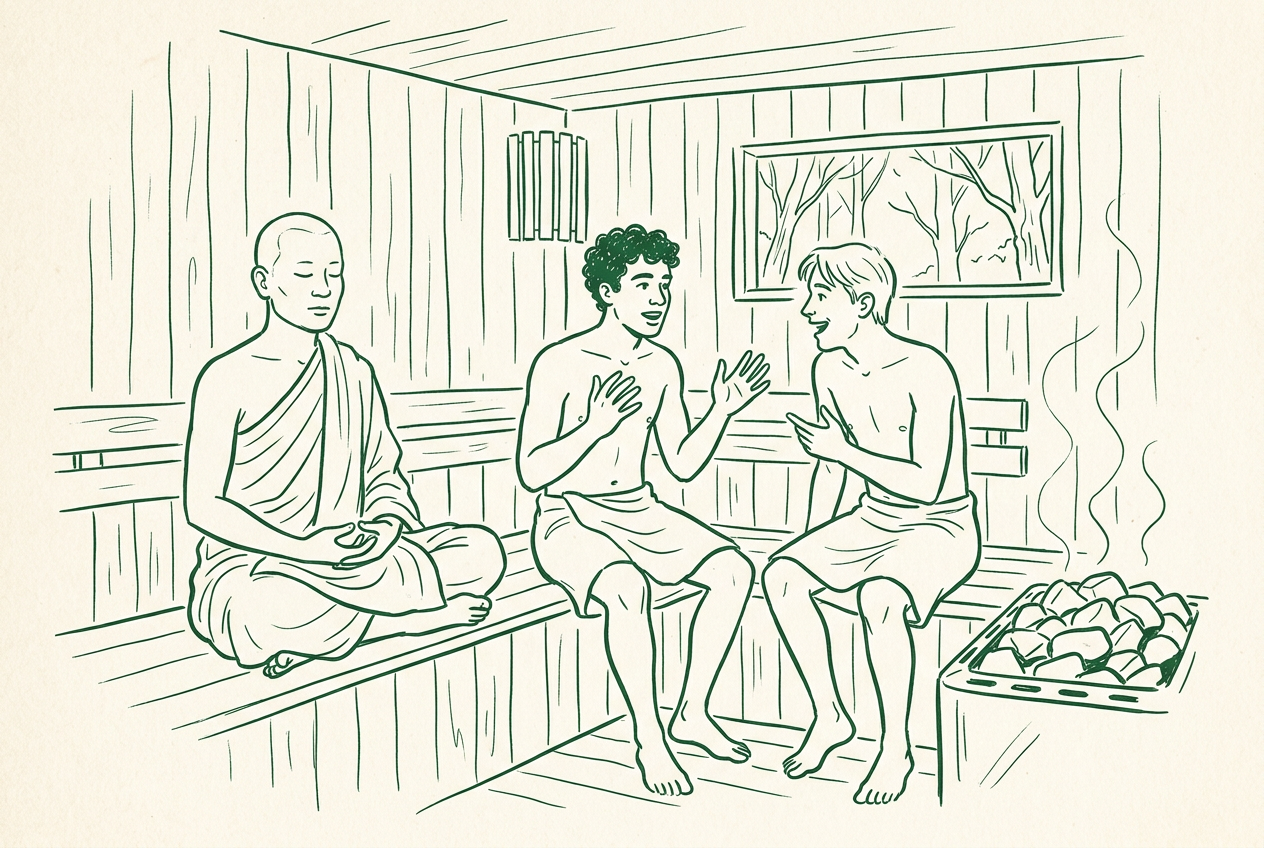
Irish saunas have developed their own particular social culture, somewhere between a casual conversation and a confessional. Something about the heat and the enforced stillness makes people unexpectedly honest. You will hear more genuine conversation in a sauna in an hour than in a pub in an evening.

A Buddhist monk meditating beside two young men chatting in a woodland sauna
The monk had questions too, but kept them to himself.

Am I allowed to take my phone in?

You can. You probably should not.

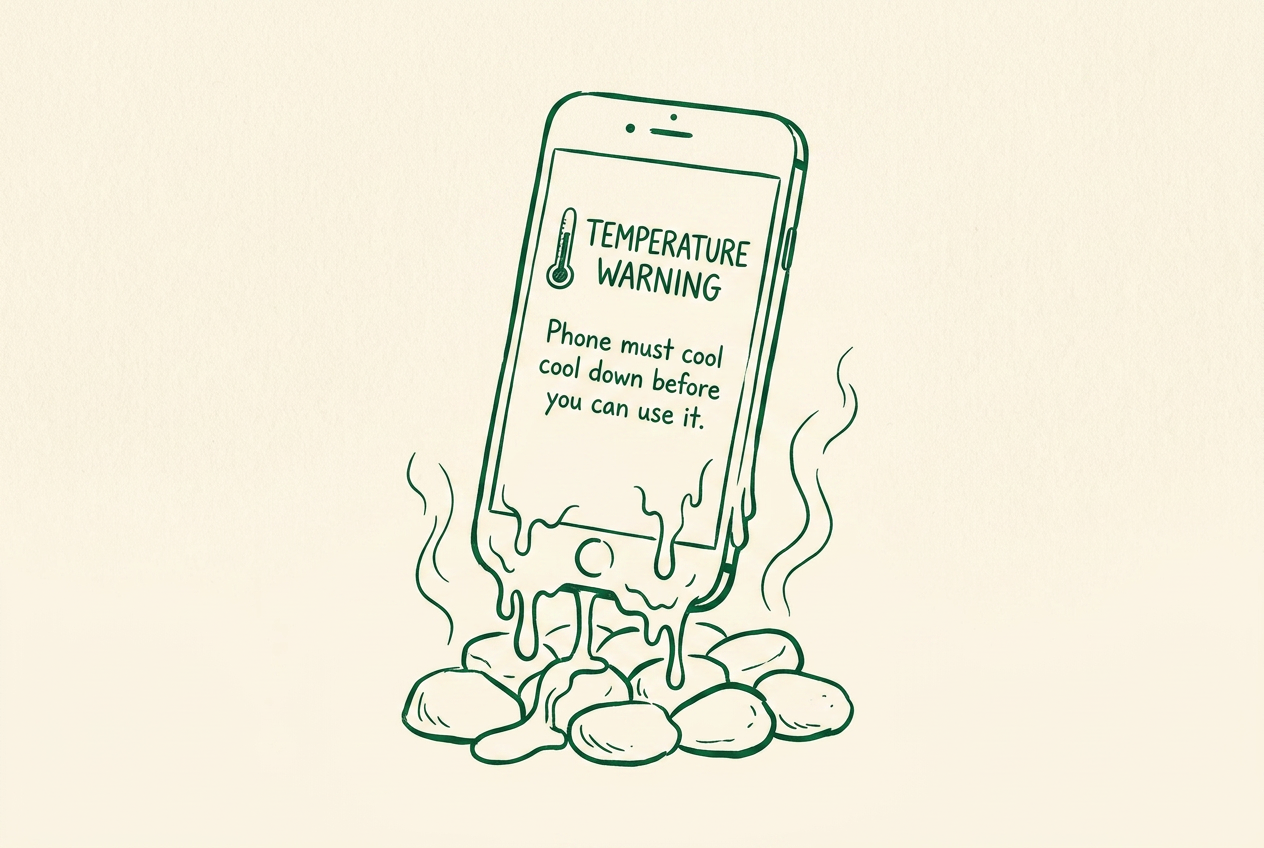
Heat and steam are not kind to electronics, and most operators will gently discourage it. More importantly: you booked a sauna, not a warmer office. The phone will survive an hour without you. There is reasonable evidence that you will also survive an hour without it.

A melting smartphone with notifications still on screen
It'll be fine. Probably.

Do I really need to bring a towel to sit on?

Yes. This one is non-negotiable.

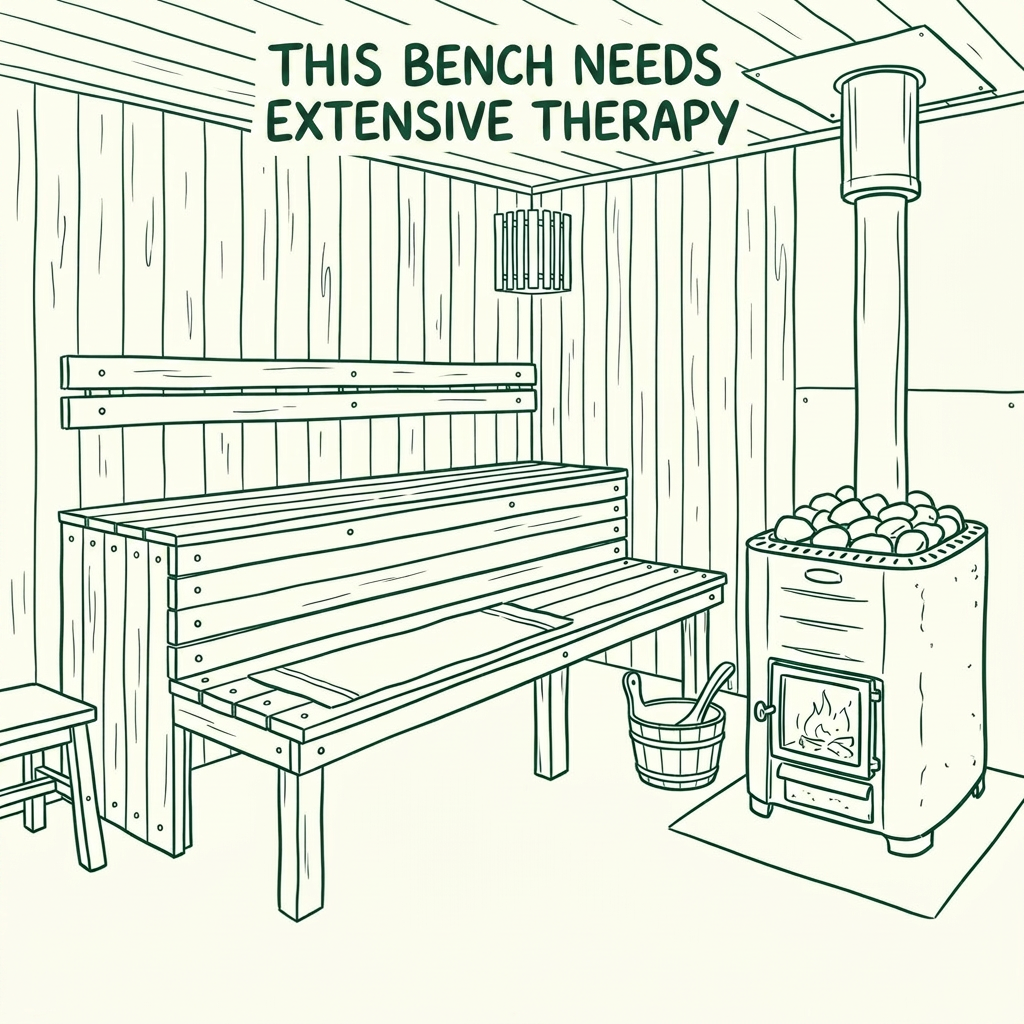
The bench is shared. You are warm. The geometry of this situation requires a towel between you and the wood at all times. It is basic hygiene and also basic respect for the next person who sits there.

A wooden sauna bench under a single spotlight
It has experienced things. Bring a towel.

What is the etiquette around scent?

Essential oils on the stones are common and usually welcomed. Strong perfume or aftershave beforehand is less welcome. You are going to sweat. Wearing a lot of scent into a small hot room is an act of aggression.

How long should I stay in the cold plunge?

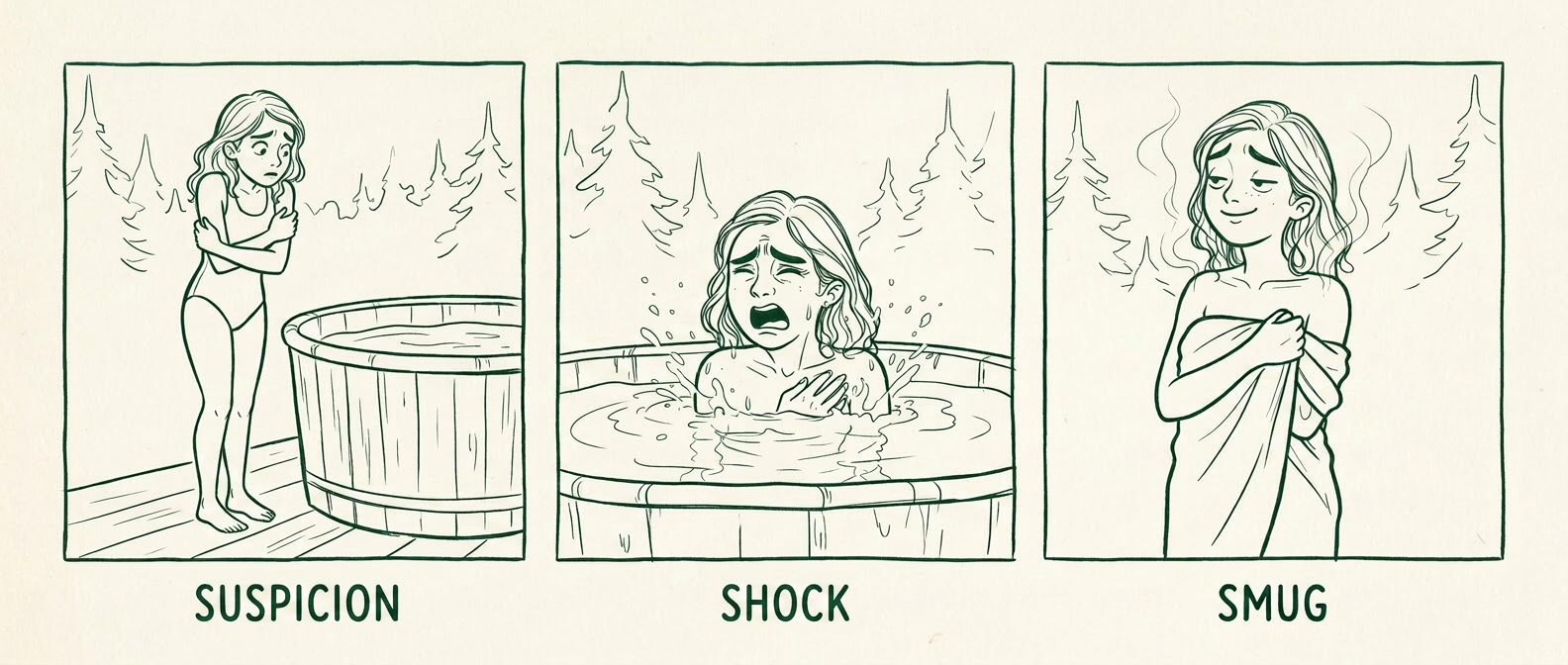
Long enough to feel it, short enough to survive it.

The research suggests 2 to 3 minutes in cold water (under 15 degrees Celsius) is sufficient to get the physiological benefits: reduced inflammation, improved circulation, the particular kind of smugness that comes from having done something most people will not.

Three faces showing calm, shock, and smug expressions
Before. During. After, forever.

Do I need to shower before the cold plunge? Even if I just had a sauna?

Yes. Every time.

This one is worth being clear about because people sometimes assume that sweating in a sauna counts as cleaning. It does not. Sweat is your body expelling waste products through your skin. The cold plunge is a shared body of water. The maths here is straightforward.

Should I finish on a hot or a cold?

Cold. Always cold.

This is one of the few areas where sauna enthusiasts, sports scientists, and people who just like feeling good are in complete agreement. Finishing on cold closes the pores, brings your core temperature back down in a controlled way, reduces inflammation, and produces the particular post-sauna feeling of calm alertness that people tend to describe in slightly evangelical terms.

What's with the funny little hats?

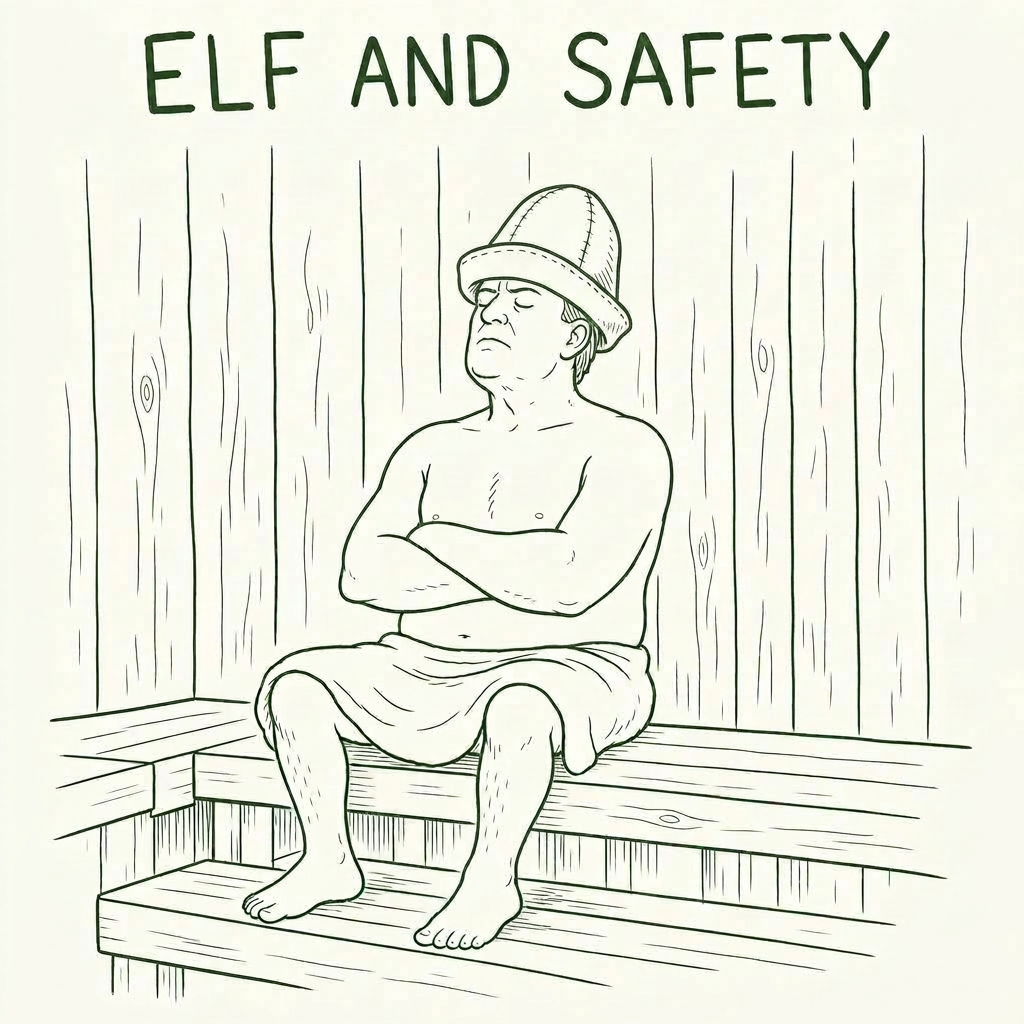
The sauna hat, traditionally wool or felt, is a Finnish invention designed to protect your head from the most intense heat near the ceiling. Hot air rises. Your ears do not need to be that hot.

In Ireland they are less common but increasingly visible, particularly among enthusiasts who have been to a Finnish sauna and come back slightly changed. They look ridiculous. They work. This is true of many things.

A serious sauna-goer wearing a tall pointy felt sauna hat
Elf and safety.

Is someone going to hit me with leaves?

Probably not, but it is worth knowing what is happening if they do.

The vihta (Finnish) or vasta (Russian) is a bundle of birch branches used to gently beat the skin during a sauna session. It improves circulation, opens pores, and smells wonderful. It is not assault. It is, in fact, considered a treat.

Can I bring my own leaves to slap myself around with?

Technically yes. Practically, prepare to explain yourself.

If you are genuinely interested in the vihta experience, birch bundles can be bought online or harvested in spring and dried. Soak them in warm water before use. The correct technique is a gentle rhythmic pat rather than a full swing.

A man being hit with birch leaves by a dominatrix in a barrel sauna
You pay extra for this.

Is it weird to go alone?

No. Many regulars go alone specifically.

A sauna is one of the few places where being alone in a room with strangers is entirely comfortable. Nobody expects you to perform sociability. You can sit, sweat, and think, or not think, which is arguably the point.

What do I do with my glasses?

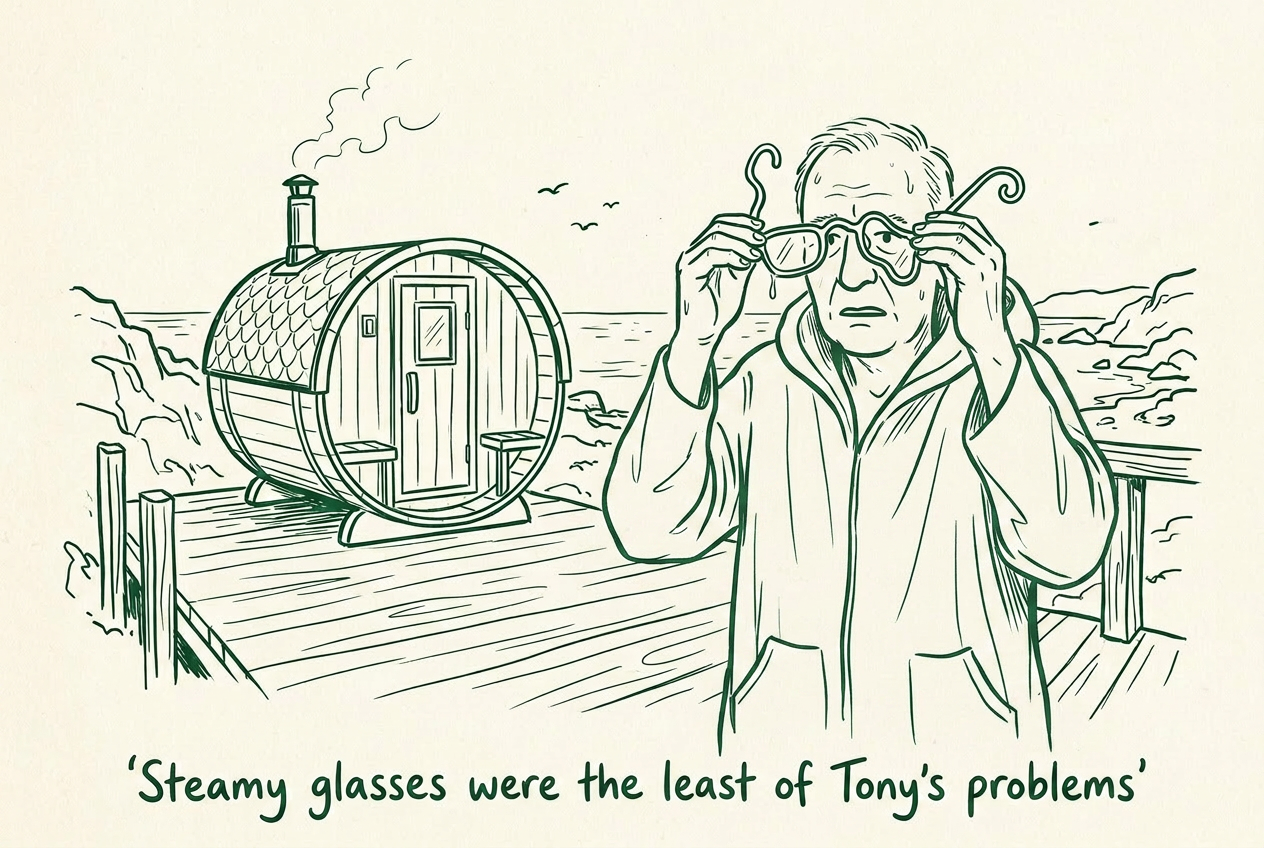
Leave them outside. You will not need to see clearly. The heat warps frames anyway.

An older man on a coastal sauna deck trying on a pair of warped, misshapen spectacles
Steamy glasses were the least of Tony's problems.

Can I drink alcohol in the sauna?

Operators will say no, correctly. Your body is already working hard to regulate temperature. Alcohol impairs that. Have the pint after. It will taste better anyway.

Aren't saunas just a fad?

Ireland has had sweat houses for at least a thousand years. Finland has had saunas for three thousand. The Romans had thermae. The Ottoman Empire had hammams. The Mayans had temazcal.

The specific format of a coastal barrel sauna with a cold plunge and a Spotify playlist is new. The underlying instinct, heat, water, stillness, community, is one of the oldest things humans do together.

The barrel sauna on Instagram might be a fad. The sauna is not.

A Brief History of Sweating on Purpose

How humans figured out that heat and water, applied deliberately, make everything better. And why Ireland was doing it long before it became an Instagram category.

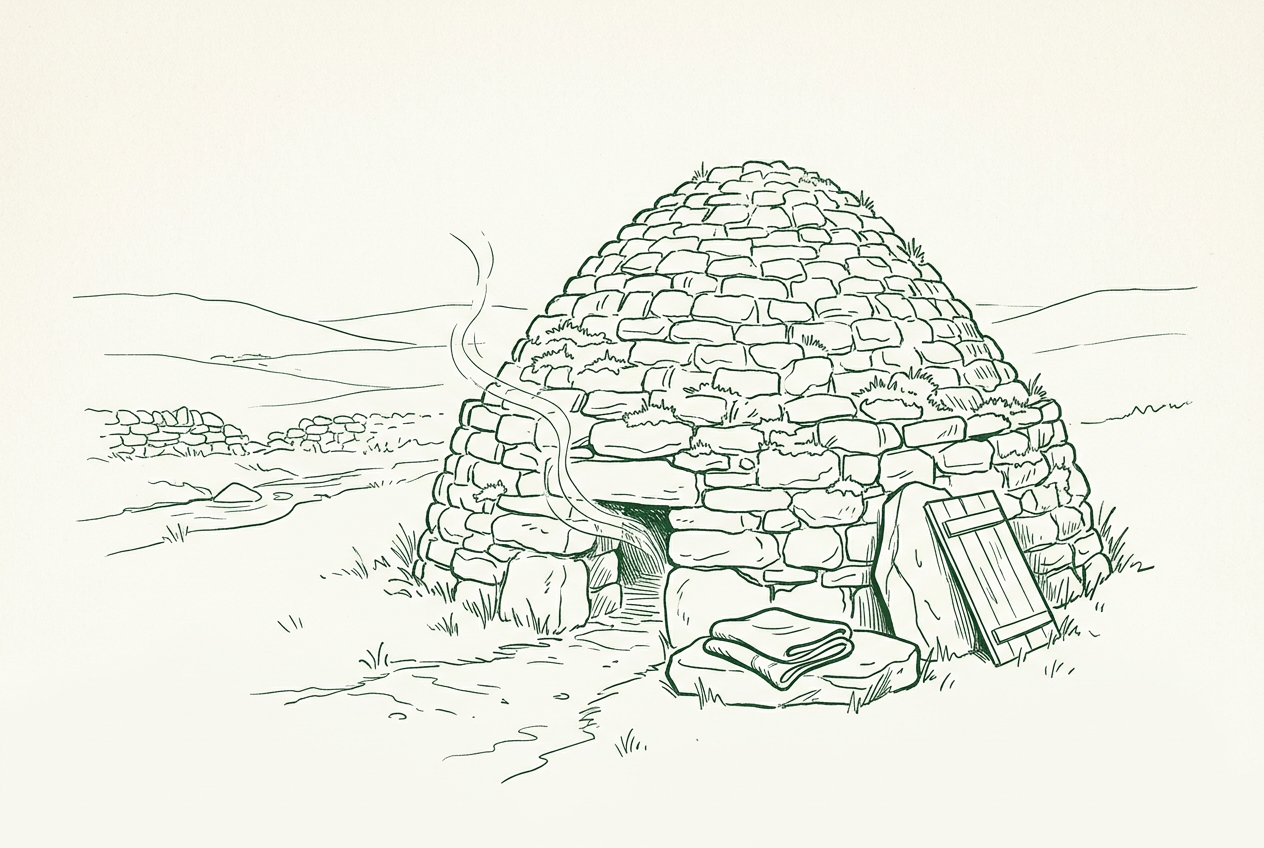
Ireland: the teach allais

Before the Finns got the credit, Ireland had sweat houses.

Teach allais, meaning literally "sweat house" in Irish, were small stone structures found across Ireland, particularly concentrated in Ulster, Connacht, and parts of Leinster. They were simple in construction: a low, beehive-shaped building of dry stone, typically just large enough for two or three people to sit inside. A fire would be lit within, the structure heated for hours, the embers cleared out, and the occupants would pile in through a small opening, often little more than a crawl space, closing it behind them.

Map of Ireland with stone beehive sweat houses dotted across it
Ireland's original sauna network. No booking system required.

Finland: the original

Finland has approximately 3.3 million saunas for a population of 5.5 million people. This is not a hobby. It is infrastructure.

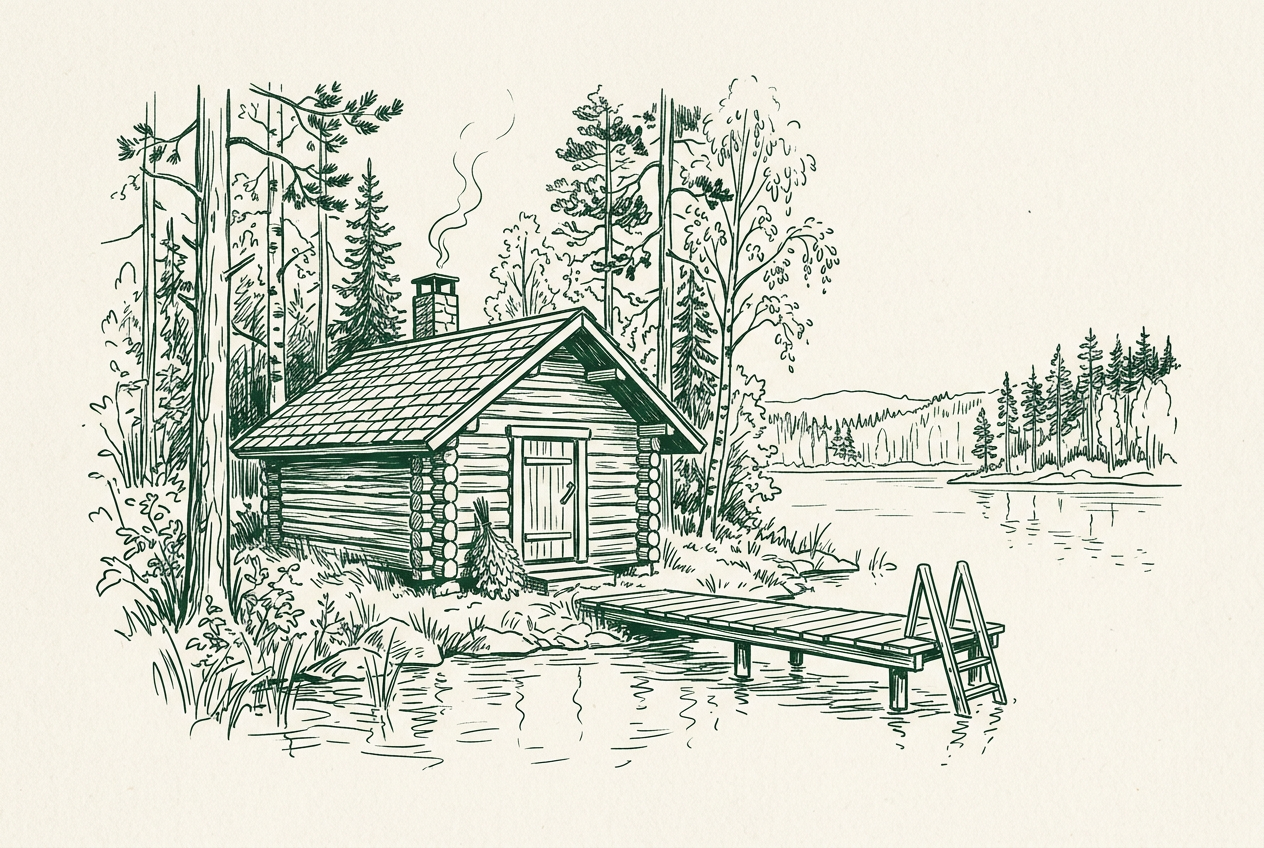
The Finnish sauna has existed in some form for at least 2,000 years, possibly longer. Early saunas were often savusauna or smoke saunas: wood-fired rooms with no chimney, filled with smoke during heating and then ventilated before use. The smoke-blackened walls contributed to heat retention and had a mild antibacterial effect. Smoke saunas are considered the most authentic experience and are still in use today.

A traditional Finnish log savusauna beside a still forest lake with a wooden jetty
A lakeside savusauna. Two thousand years of practice.

Russia: the banya

The Russian banya shares DNA with the Finnish sauna but has developed its own distinct character.

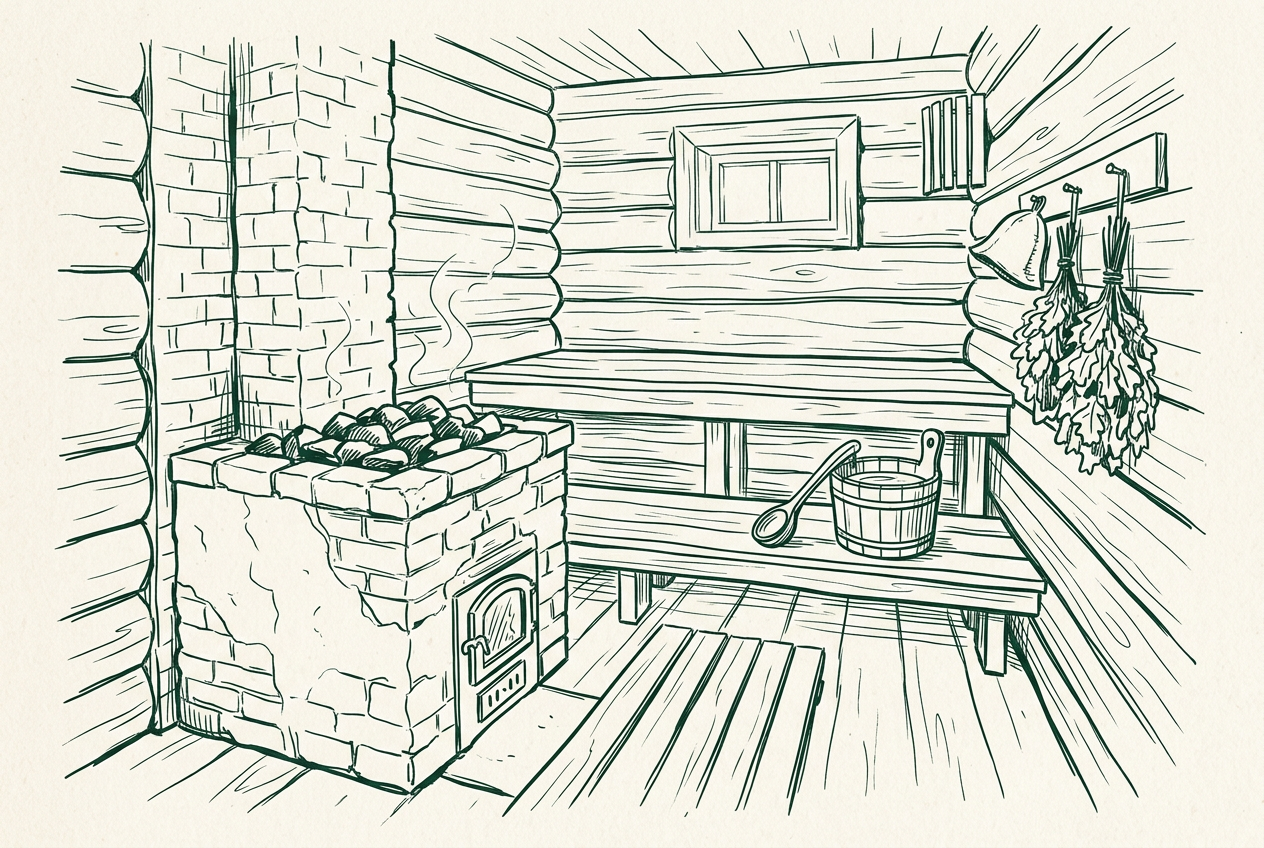
The key difference is steam. Where the Finnish sauna is a dry heat punctuated by occasional loyly, the banya operates at lower temperatures, typically 60 to 80 degrees, but much higher humidity, producing a wet, enveloping heat that many devotees consider superior for the skin and respiratory system.

Interior of a traditional Russian banya with a brick stove, wooden benches and bundles of birch leaves on the wall
Inside a traditional banya. Veniki on the wall, kamenka in the corner.

Scandinavia more broadly

While Finland dominates the conversation, sauna culture across Scandinavia has its own regional variations.

Sweden has its own tradition, bastu, that shares much with Finland but developed more independently of the extreme heat culture. Swedish saunas tend to run slightly cooler and the tradition, while deeply embedded in everyday life, is perhaps less central to national identity.

Japan: onsen and sento

Japan's relationship with heat bathing is ancient, deeply embedded in daily life, and produces some of the most beautiful bathing architecture in the world.

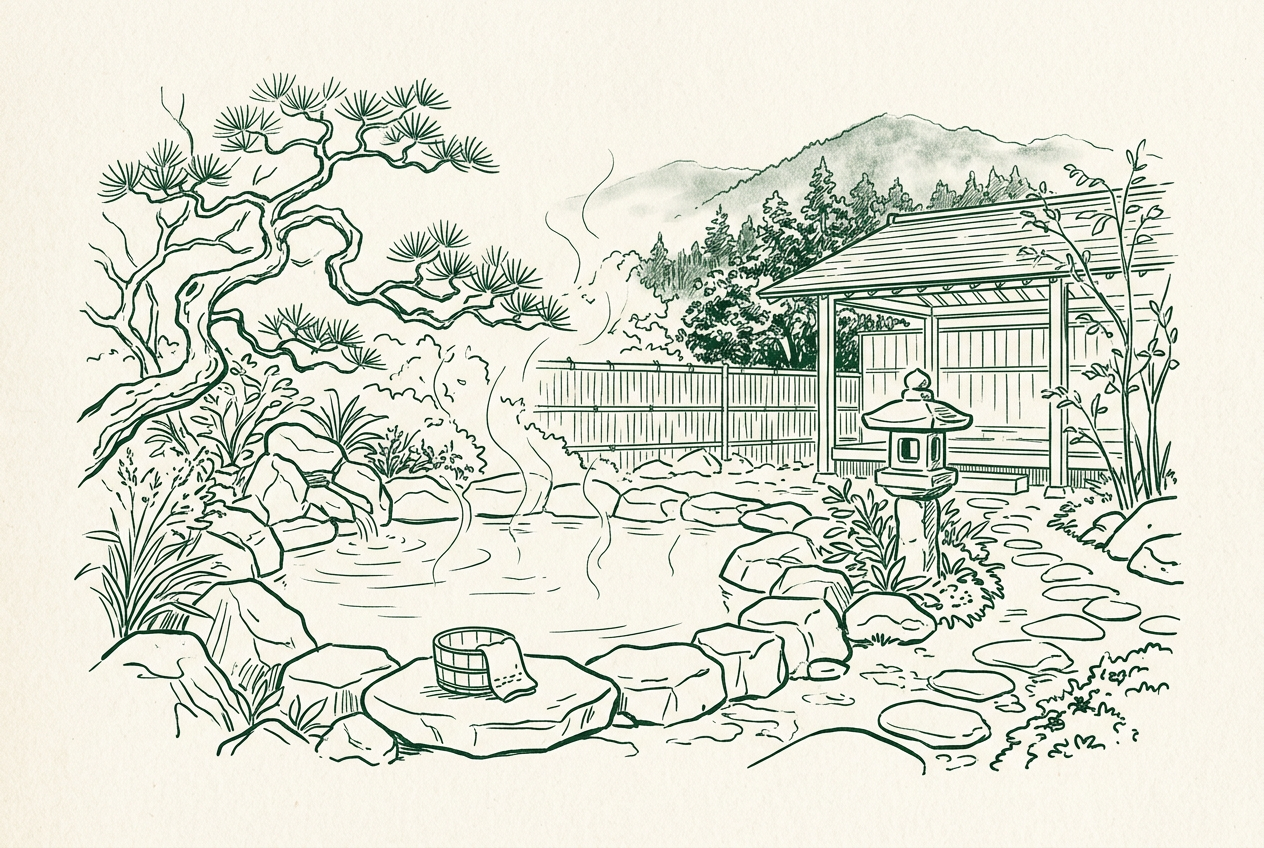
Onsen are natural hot spring baths, fed by geothermal water and found across Japan's volcanically active landscape. There are over 3,000 onsen towns in Japan, and the practice of bathing in them has been documented for over a thousand years. The water varies dramatically by location, each mineral composition carrying its own claimed therapeutic properties. Some onsen are indoors, some are rotenburo (outdoor), and the best combine both.

A traditional Japanese outdoor onsen with stone-edged hot spring water, pine, and a stone lantern
A rotenburo at rest. The water has been doing this for a thousand years.

Rome: the thermae

The Romans, characteristically, took something people were already doing and built a civic institution around it.

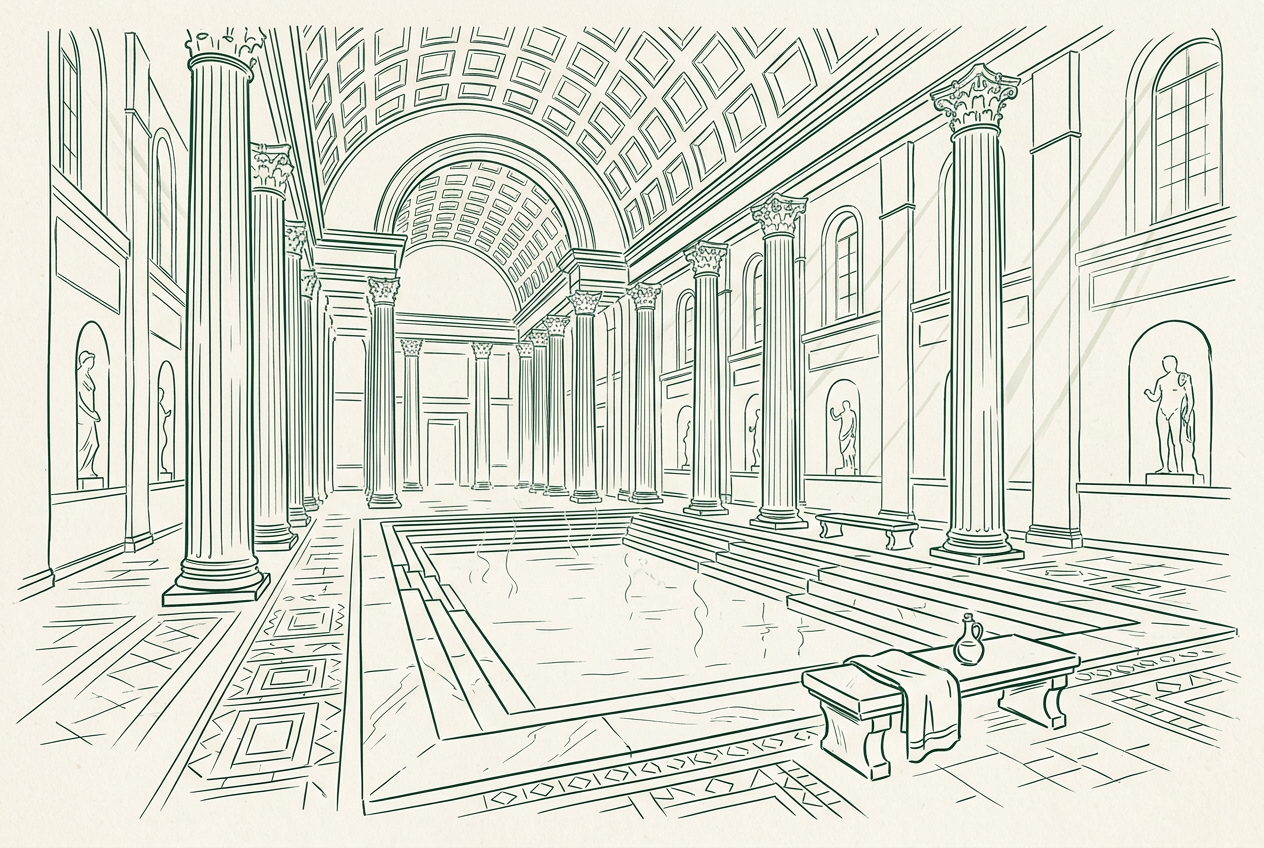
The Roman thermae were public bathing complexes of extraordinary scale. The Baths of Caracalla in Rome, completed in 216 AD, could accommodate 1,600 bathers simultaneously across a complex that included hot rooms (caldarium), warm rooms (tepidarium), cold rooms (frigidarium), swimming pools, exercise yards, libraries, and gardens. Entry was cheap, often free, and attendance was an expected part of Roman social life.

Interior of a vast Roman thermae bathing hall with vaulted ceilings, columns and a central pool
A thermae chamber. Built for 1,600. Quiet for now.

The hammam

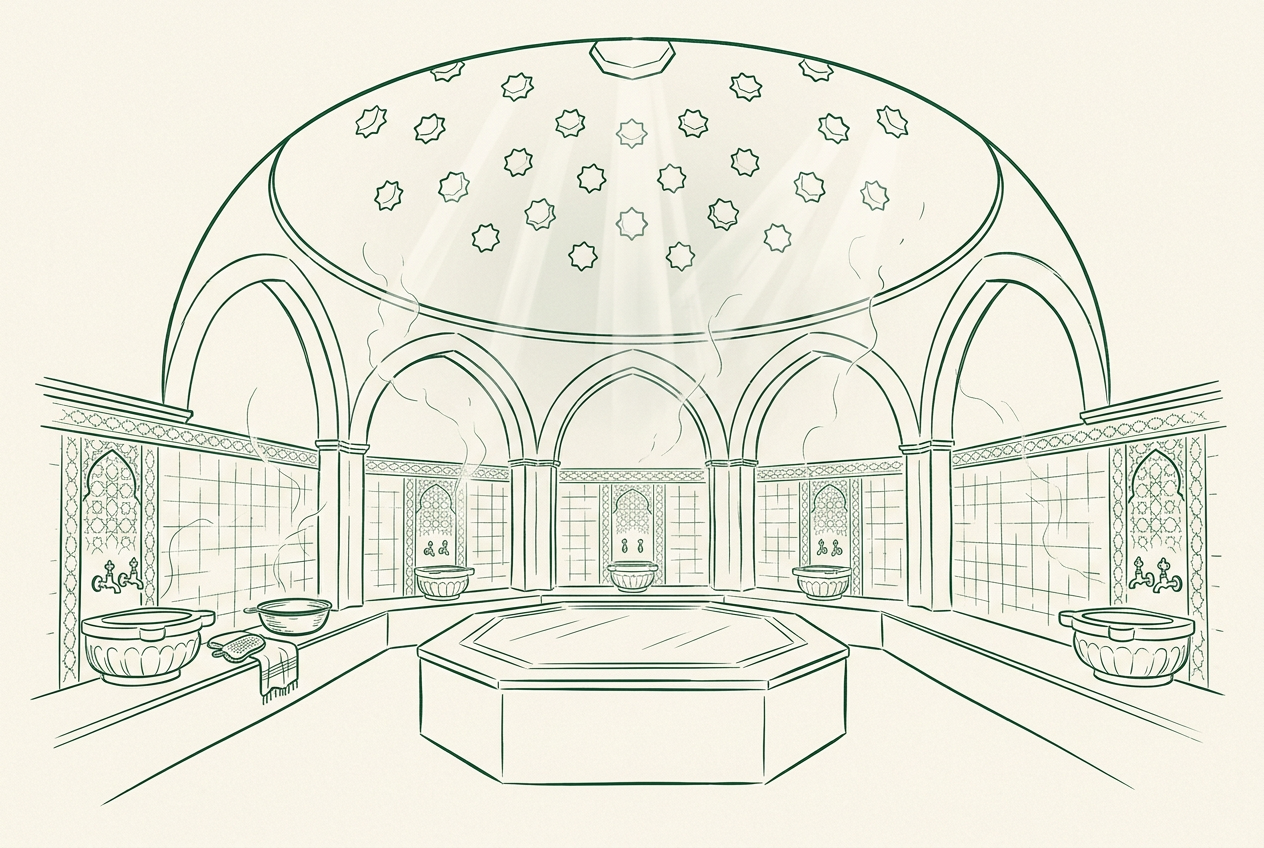
The hammam, the Turkish bath, operates on a different principle to the Nordic sauna: a heated stone room with a marble platform at its centre, on which bathers lie and are scrubbed with a coarse mitt before being soaped, massaged, and rinsed. The heat is wet rather than dry, the social dimension significant, and the experience considerably more passive. You are attended to rather than self-directing.

The hammam tradition spread throughout the Ottoman Empire and survives in its most authentic form in Turkey, Morocco, and parts of the Middle East. It shares with the sauna the fundamental combination of heat, water, and community, but the aesthetic and cultural context is entirely different.

Interior of a traditional Turkish hammam with a domed ceiling, central marble platform and marble basins
Light through the dome. The göbektaşı waits.

The global resurgence: why now?

It is worth asking why, after a century of decline in most of the western world, communal heat bathing is experiencing such a significant revival.

The infrastructure explanation is partial but real: better insulation materials, modern wood burning stoves, and the portability of barrel sauna designs have made it genuinely easier and cheaper to build and operate a sauna than at any point in history.